
Case Study · Milestone Portfolio
Family Photo LEGO Mosaic at 96×96: Four Faces, Maximum Detail
A 96×96 build is the "Gold Standard" for family portraits. With 9,216 pieces, it provides the necessary resolution to capture distinct facial features for multiple people in a single frame.
Result Gallery
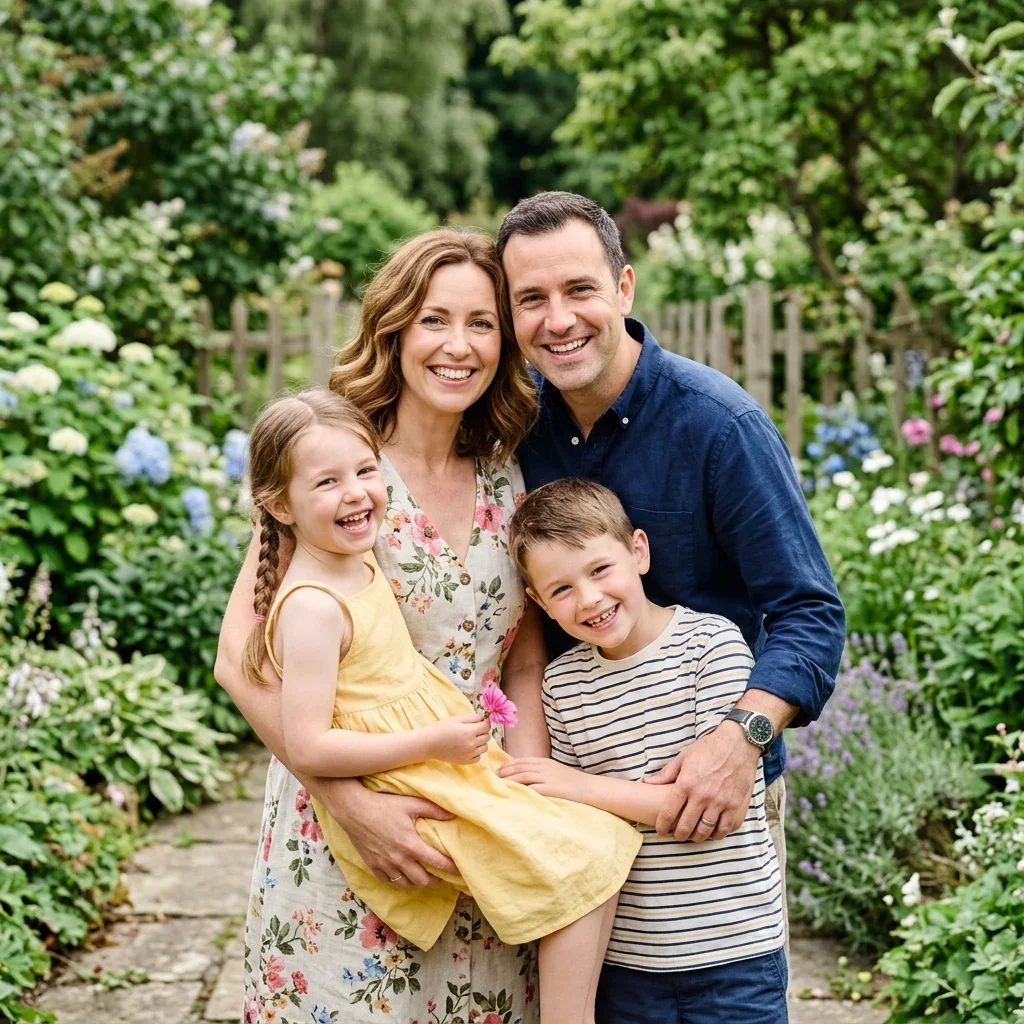
Original source photo
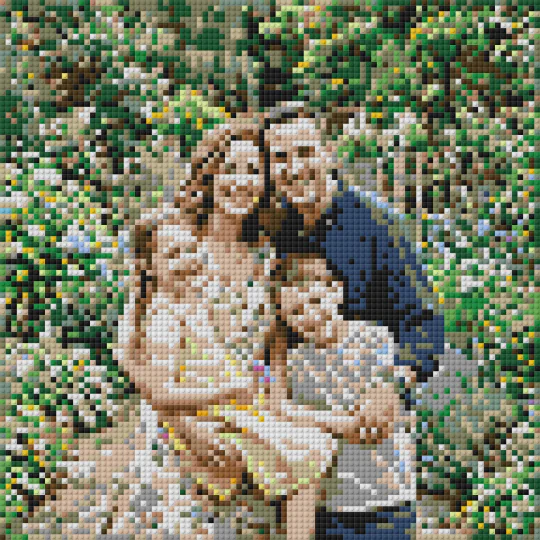
BMBrick mosaic preview
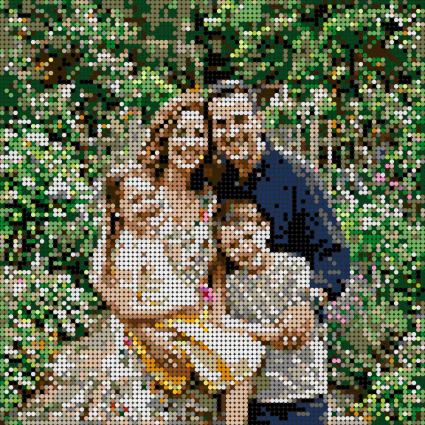
Round tiles preview
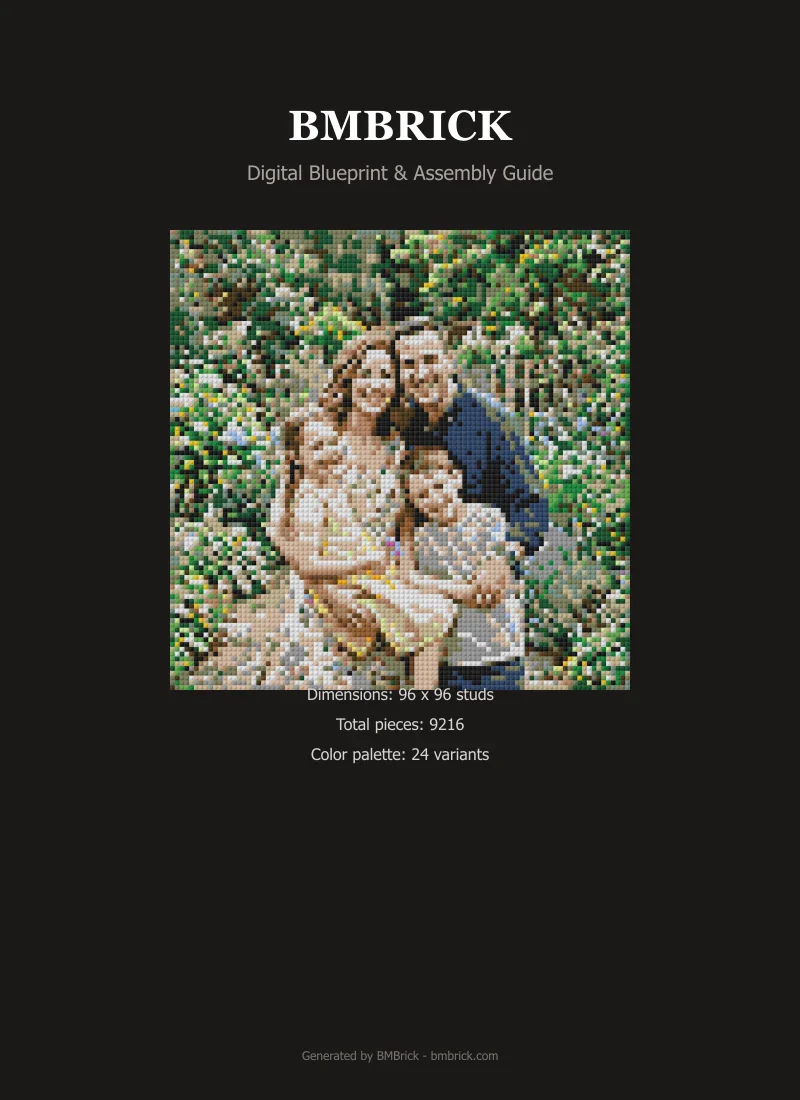
PDF instruction excerpt
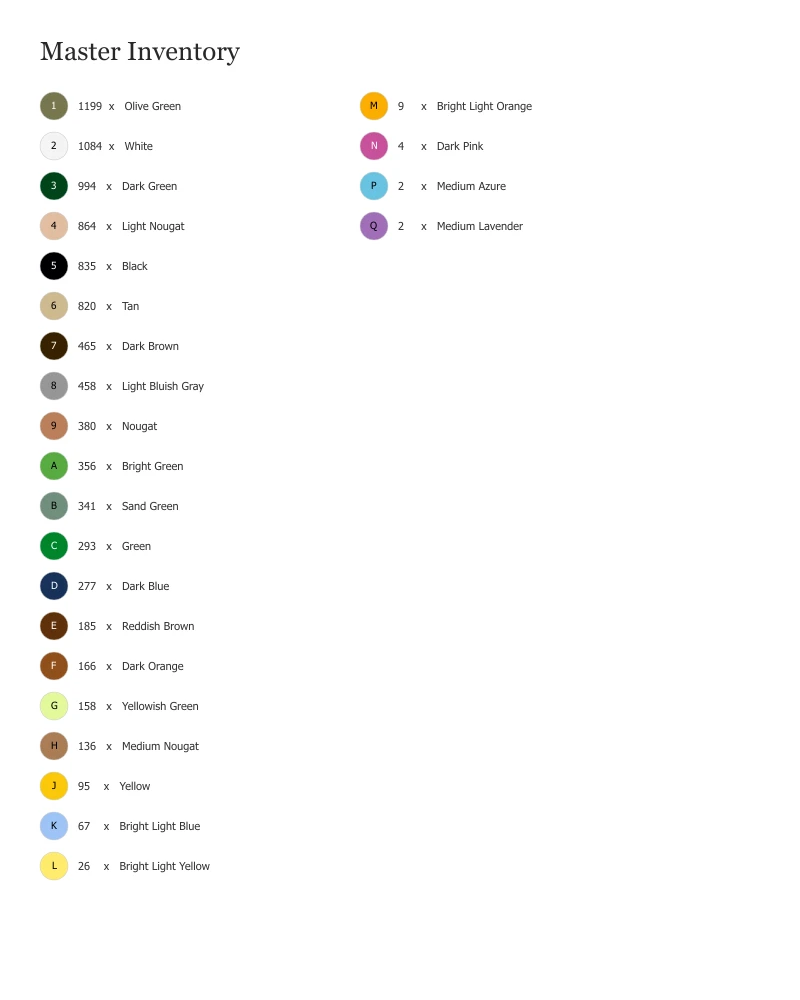
Parts list excerpt
For a family photo with 4 people, 96×96 is the recommended minimum size for high-fidelity results. While a single face can work at 48×48, splitting that resolution across four subjects results in unrecognizable features. At 96×96 (9,216 pieces), each subject receives approximately 2,300 pixels of detail, making it the only reliable choice for a premium family keepsake.
Quick Facts
| Photo type | Family portrait — 4 people (2 adults, 2 children) |
|---|---|
| Mosaic size | 96×96 studs — high density for groups |
| Brick type | Square 1×1 plates (LEGO #3024) |
| Total pieces | 9,216 |
| Estimated cost | ~$550 via LEGO PAB |
| Build time | 15–25 hours |
| Difficulty | Advanced |
| Output files | PDF instructions, BrickLink XML, PAB CSV |
Sourcing & Hardware Breakdown
A 96×96 family mosaic is a serious sourcing project — it needs 9,216 plates plus 36 baseplates and ~144 connector pins. At this scale, the sourcing route choice can swing total cost by $500+. Here's the full bill of materials with prices across three routes.
Hardware required for a 96×96 build
| 1×1 plates (mosaic surface) | 9,216× LEGO #3024 across ~28–32 colors |
|---|---|
| Baseplates | 36× 16×16 stud baseplates (LEGO #91405 or compatible) — arranged in a 6×6 grid |
| Connector pins | ~144× Technic pins (LEGO #2780) to lock the 36 modules together — expect roughly 4 pins per inter-module edge |
| Finished dimensions | 76.8 × 76.8 cm (~30″ × 30″) |
| Backing board (strongly recommended) | 80 × 80 cm MDF or 18 mm plywood — at this size, a backing board prevents flex and edge separation over time |
| Frame (recommended) | 32″ × 32″ deep-edge floating frame, 6–7 cm depth |
| Wall-mount hardware | D-ring hangers + heavy-duty drywall anchors (finished build weighs ~6–8 kg) |
Cost breakdown by sourcing route
| Component | LEGO Pick-a-Brick | BrickLink (4–6 sellers) | Webrick (China) |
|---|---|---|---|
| 9,216 × 1×1 plates | $553 ($0.06/pc) | ~$369 ($0.04/pc avg) | ~¥1,290 (~$181) |
| 36 × 16×16 baseplates | ~$180 ($5 each) | ~$120 ($3.30 each) | ~¥324 (~$45) |
| ~144 connector pins | ~$29 ($0.20 each) | ~$12 ($0.08 each) | ~¥58 (~$8) |
| Shipping | $10–15 (1 order) | $50–70 (4–6 orders) | varies by region |
| Total (excl. frame & mount) | ~$775 | ~$555 | ~¥1,672 (~$235) |
How to choose at this size: For a 96×96 gift build, LEGO PAB is worth the premium if you need it shipped on a deadline — one tracked order, predictable colors. BrickLink at this scale typically saves $200+ but expect 2–4 weeks of staggered delivery across 4–6 sellers and ~5–10% out-of-stock substitution. Webrick is dramatically cheaper but the palette has slightly different shades from official LEGO — we recommend re-running the mosaic generation with the Webrick palette selected to get an accurate preview. Prices are 2026-05 estimates.
Original Photo Analysis
Subject Clarity
All four faces must be sharp, front-facing, and well-lit simultaneously — a rare alignment in casual family photos. This case used a professionally framed shot.
Background Complexity
Simple park background — relatively low complexity. Still removed with Magic Cut to maximize face palette allocation across four subjects.
Lighting Quality
Even natural light with slight overcast — ideal because it eliminated harsh shadows that would have consumed palette budget on one subject at the expense of others.
Contrast and Tonal Range
Lower overall contrast than couple photos because four skin tones must coexist without one dominating. Careful palette tuning was required.
Crop Suitability
All four faces at equal scale in a horizontal arrangement. No person significantly larger or smaller than others — essential for fairness in the final mosaic.
Setup Choices
Size Choice
96×96 is the recommended minimum for four faces. At 64×64, each face occupies only ~21 horizontal pixels — anyone with glasses or very fine features may lose detail.
Brick Type
Square plates. Round tiles would add texture noise that further complicates an already complex palette with four distinct face zones.
Background Treatment
Background fully removed. Every piece saved from the background directly improves the pixel budget available to faces.
Color Mode
28 active colors — required to handle four distinct skin tones, four sets of hair, and clothing differentiation without merging any two subjects.
Cost and Parts Breakdown
| Metric | Value | Notes |
|---|---|---|
| Total pieces | 9,216 | All 1x1 plates or tiles |
| Cost estimate | ~$550 via LEGO PAB | At .06/piece via LEGO PAB |
| Build time | 15–25 hours | Single builder |
| Sourcing | BrickLink, PAB, Webrick | XML/CSV export available |
Lessons Learned
What Worked
- Even lighting across all four subjects made it possible to use a shared palette without one person dominating the color allocation
- Horizontal face arrangement with equal sizing prevented any one person from being unrecognizable while others were clear
- 28-color palette successfully maintained four distinct skin tone zones
What Did Not Work
- Children's fine facial features (small nose, thin eyebrows) are nearly invisible at this face-pixel ratio — 96x96 is the bare minimum for groups
- Clothing detail is largely lost — the mosaic reads as colored rectangles below each face rather than actual clothing
Best For
- Families who prioritize having all members recognizable over fine detail
- Experienced builders comfortable with 15-25 hour build sessions
- Photos with even lighting and simple backgrounds — the hard constraint for family success
Family photos with four or more faces are the most demanding mosaic source — success requires equal lighting, tight horizontal cropping of all faces, simple backgrounds, and accepting that 96×96 is the minimum viable size for recognizable results.