
Case Study — Brick Type
Square Plates vs Round Tiles: Same Photo, Different Feel at 48×48
The same cat portrait photo rendered twice — once with square plates, once with round tiles — showing the visual difference and helping you decide which aesthetic fits your project.
Result Gallery
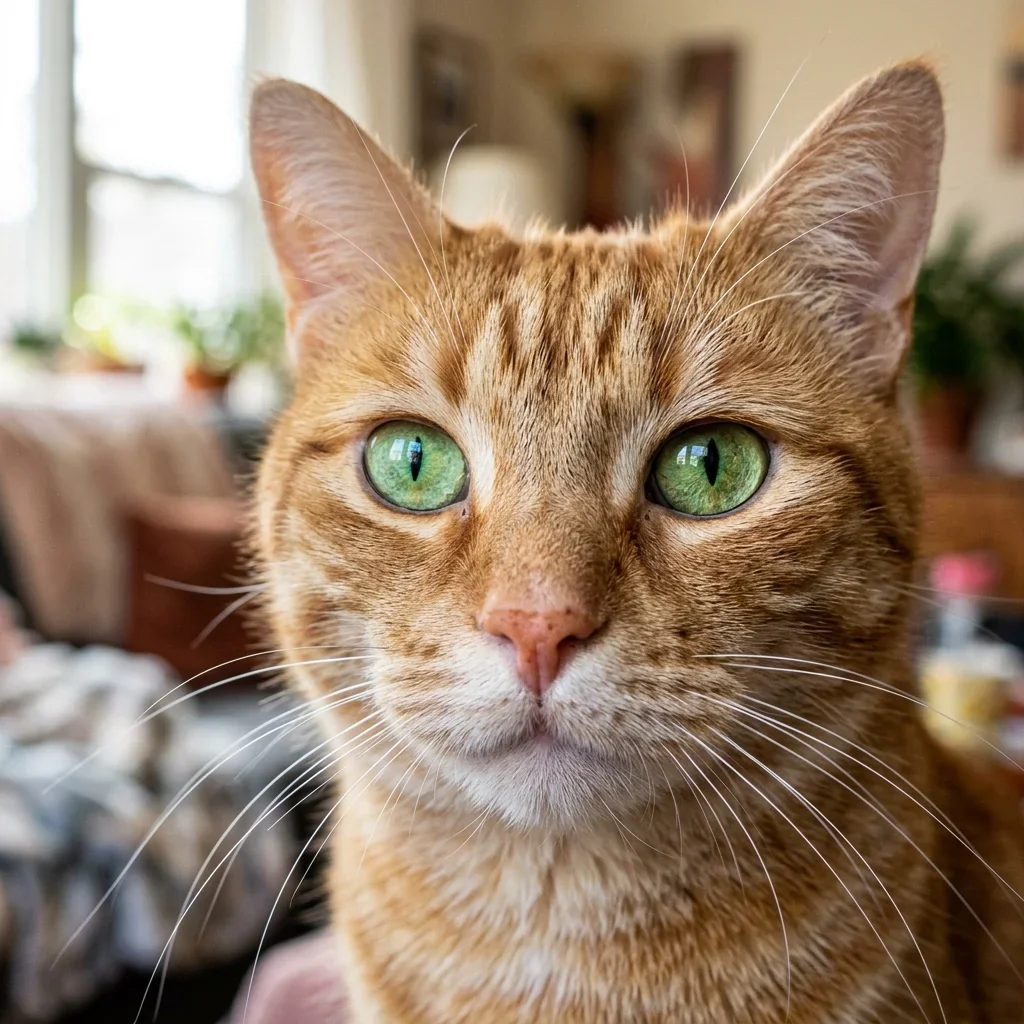
Original source photo
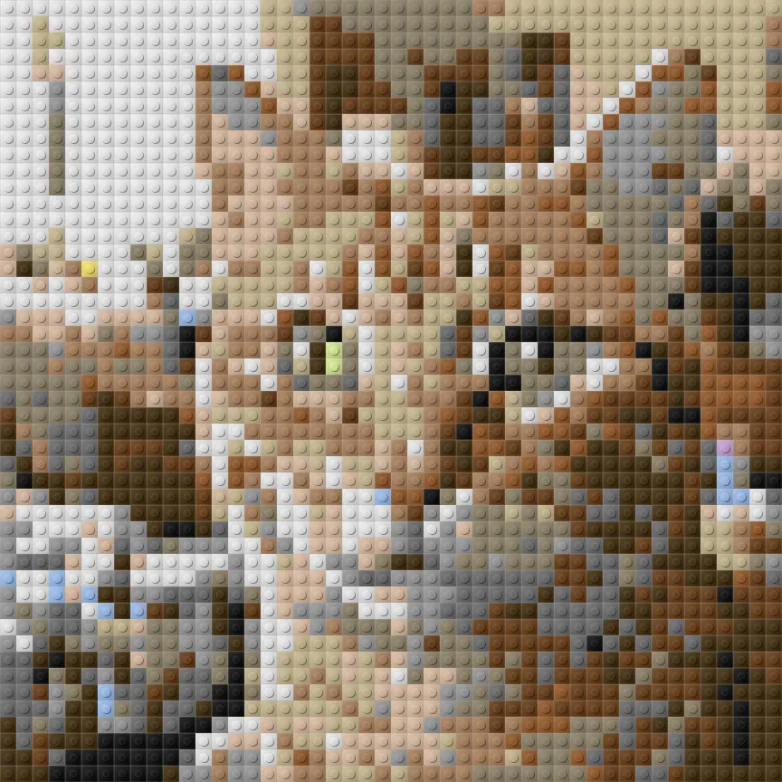
Square Plates Preview (Smooth Gradients)
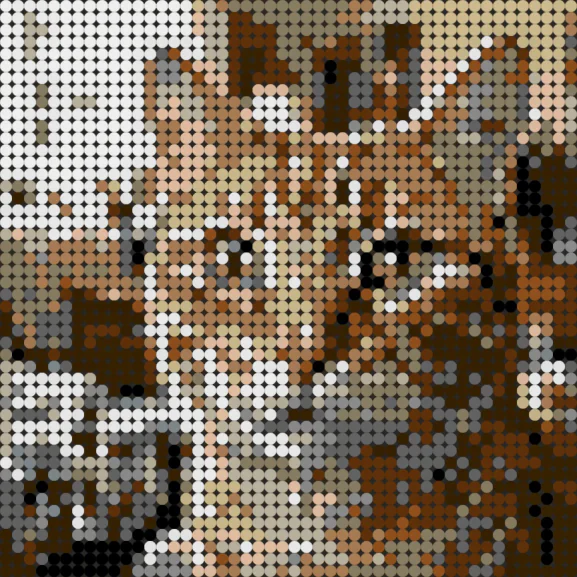
Round Tiles Preview (Textured & Graphic)
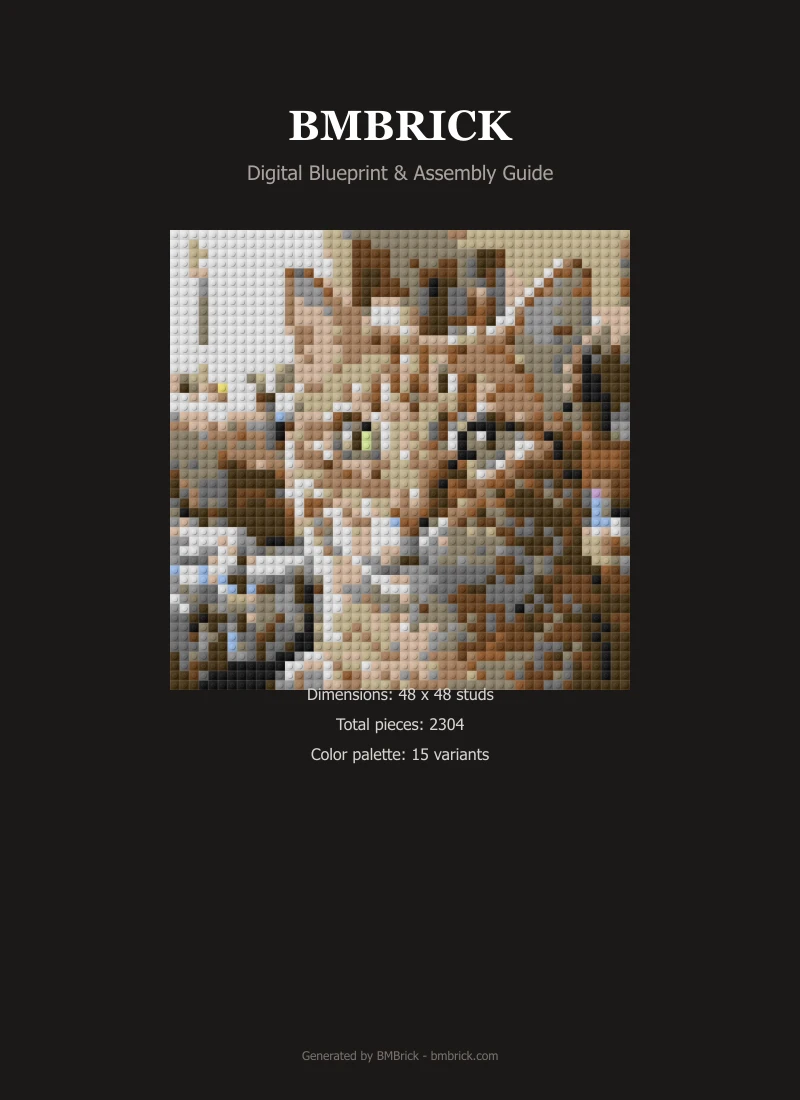
PDF instruction excerpt
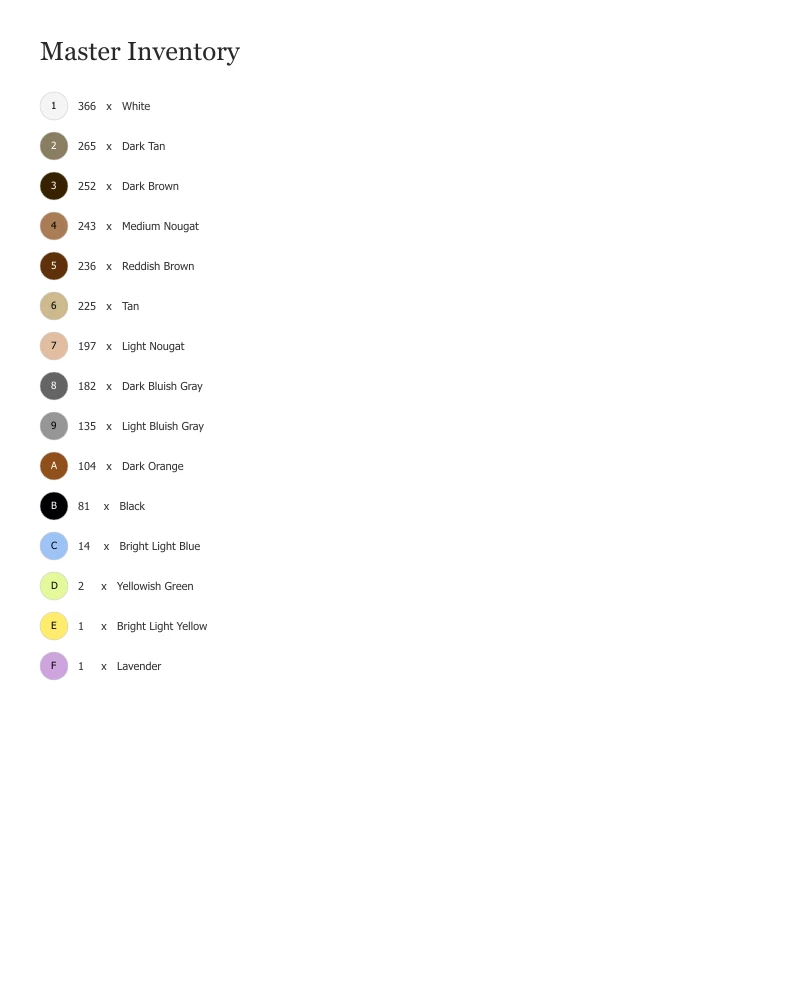
Parts list excerpt
This cat portrait works at 48×48 in both brick types, but produces distinctly different aesthetics. Square plates create smooth, continuous tonal gradients — ideal for realistic portraits. Round tiles add visible raised-dot texture and create a more pixelated, graphic feel — better for retro or stylized subjects. Round tiles cost slightly more (~$0.06–$0.08 per piece) and have fewer available colors.
Quick Facts
| Photo type | Cat Portrait — same photo used for both renders |
|---|---|
| Mosaic size | 48×48 studs (38.4 × 38.4 cm) |
| Brick type | Square (#3024) vs Round (#98138) — compared |
| Total pieces | 2,304 per version |
| Estimated cost | ~$138 (square) vs ~$155 (round) |
| Build time | 3–5 hours |
| Difficulty | Beginner |
| Output files | PDF, BrickLink XML, PAB CSV |
Original Photo Analysis
Subject Clarity
Same photo for both. Sharp, high-contrast cat portrait — ideal test subject for isolating the brick-type variable.
Background Complexity
Background removed for both renders to eliminate a secondary variable. Only brick type differs between the two outputs.
Lighting Quality
Even, soft natural lighting with clear shadow definition. Shadow areas show the most visible texture difference between square and round builds.
Contrast and Tonal Range
High contrast portrait ensures both brick types have enough tonal variation to test effectively. Low-contrast subjects often show minimal difference between the two.
Crop Suitability
Face-first crop, cat's face filling 70% of frame. Identical crop used for both renders to keep the comparison clean.
Setup Choices
Size Choice
48×48 chosen to demonstrate that the brick-type difference is visible even at smaller sizes. At larger sizes the texture effect becomes even more pronounced.
Brick Type
Both previews were regenerated with the current matching route for each material. Square plates use LEGO #3024 colors; round tiles use LEGO #98138 colors. The source image, crop, size, and dithering settings stay fixed so the comparison isolates material feel and route availability.
Background
Background removed identically for both. Any background difference would shift the visual comparison away from brick type.
Color Mode
Each material uses the colors available on its current route, while the same source/crop/dither controls keep the visual comparison focused on square plates versus round tiles.
Cost and Parts Breakdown
| Metric | Value | Notes |
|---|---|---|
| Total pieces | 2,304 per version | All 1x1 plates or tiles |
| Cost estimate | ~$138 (square) vs ~$155 (round) | Round tiles ~20% more expensive; fewer PAB colors available |
| Build time | 3–5 hours | Single builder |
| Sourcing | BrickLink, PAB, Webrick | XML/CSV export available |
Lessons Learned
What Worked
- Square plates produce smoother portraits that look more realistic at viewing distance
- Round tiles create a distinct textured effect that can look excellent for pixel-art or retro-style subjects
- The difference is immediately visible and helps builders make an informed aesthetic choice before ordering
What Did Not Work
- Round tiles have fewer available colors in PAB — some palette slots may need substitution
- Round tiles cost more per piece and have lower availability for some colors on BrickLink
Best For
- Builders unsure which aesthetic matches their display context
- Retro or pixel-art themed builds where round tile texture adds character
- Realistic portrait subjects where smooth gradients are more important than texture
Square plates are the default choice for realistic portraits — they create smooth gradients that read as faces from a distance. Round tiles suit pixel-art or retro aesthetics but cost more and have fewer available colors. For a first build, square plates reduce sourcing complexity.